Surron Motor Diagnostic Services: A Complete Guide
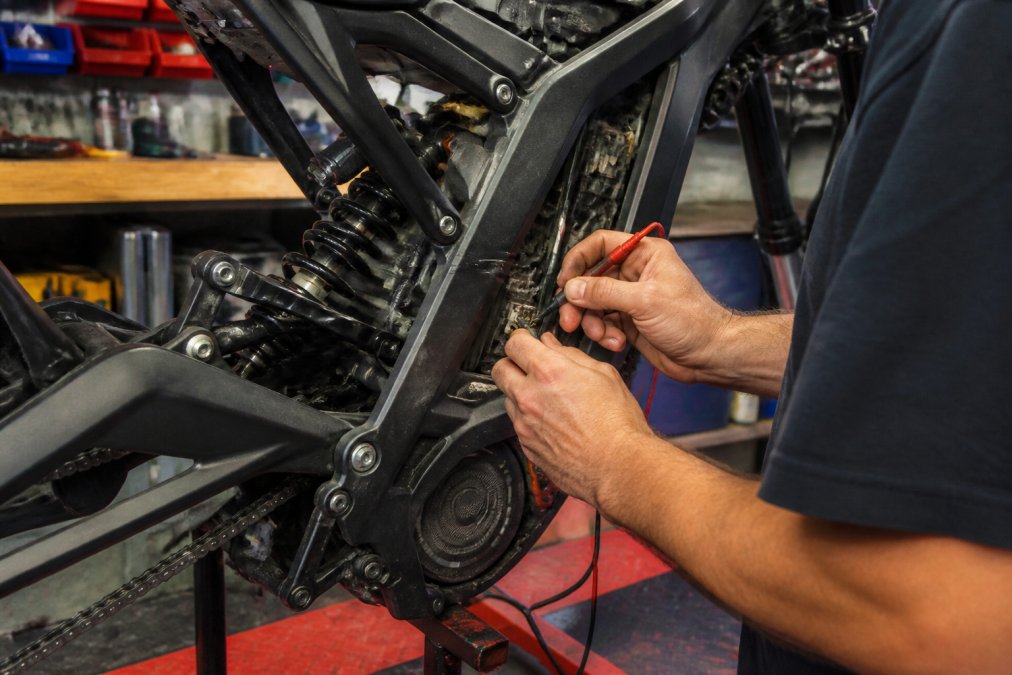
Table of Contents
- What Surron Motor Diagnostic Services Actually Involve
- Understanding Surron Controller Error Codes and What They Mean
- Motor and Controller Troubleshooting for Electric Motorcycles
- E-Moto Motor Repair Cost: What to Budget
- Surron Maintenance Schedule: Staying Ahead of Problems
- DIY vs. Professional Diagnostic Checklist
- Safety Protocols for High-Voltage System Work
- Finding Expert Surron Motor Diagnostic Services Near You
- Frequently Asked Questions
Last Updated: September 2, 2026
What Surron Motor Diagnostic Services Actually Involve
A surron motor diagnostic is a comprehensive evaluation of your electric motorcycle's powertrain, electrical system, and control components to identify faults, performance issues, or potential failures. Professional diagnostics use specialized equipment to read error codes, measure voltage and current across the high-voltage system, and test motor responsiveness under load.
An electric motorcycle's complexity sits in layers: the battery management system, controller firmware, motor windings, and throttle response all communicate constantly. When one component fails silently, it cascades. A proper diagnostic catches these problems before they compound.
The diagnostic process includes reading fault codes from the controller, testing battery cell balancing and voltage output, measuring phase wire continuity on the brushless motor, checking throttle sensor calibration, and running the motor under controlled load to verify torque delivery and thermal response. A diagnostic gives you actual data: specific error codes that tell you exactly what's wrong, voltage readings that show whether your battery is healthy, and performance metrics that prove whether the motor is delivering full power.
Understanding Surron Controller Error Codes and What They Mean
Your Surron's controller is essentially a computer that manages everything from throttle input to regenerative braking. When something goes wrong, it logs an error code. Understanding what those codes mean is the difference between a $50 fix and a $500 replacement.
Error codes fall into several categories: motor phase faults indicate a break or short in one of the three power wires connecting the controller to the motor; battery voltage faults trigger when the pack drops below safe operating range or when individual cells become unbalanced; throttle sensor faults mean the controller can't read your input cleanly; and temperature faults protect the system by limiting power when the motor or controller gets too hot.
When to Seek Professional Diagnostics
Get a professional diagnostic if the bike loses power suddenly, won't respond to throttle input consistently, displays a warning light on the display, or makes unusual electrical sounds. Run diagnostics annually if you ride frequently or have modified the motor or battery. Some error codes clear themselves if they're one-off electrical noise. Others persist because something is genuinely broken. A professional can differentiate.
Motor and Controller Troubleshooting for Electric Motorcycles
The motor and controller are the engine and transmission of your e-moto combined. The controller reads your throttle input, calculates the power demand, and sends precisely timed electrical pulses to the motor's three phase wires. If any component in that chain is weak, the whole system feels broken.
Common motor issues include loss of torque (usually a phase wire problem or firmware glitch), inconsistent acceleration (throttle sensor drift or controller calibration issue), and overheating (thermal management or sustained high power). Common controller issues include erratic power delivery (software bug or water intrusion), failure to power on (battery voltage issue or internal relay failure), and unexpected shutdown under load (thermal protection or cell balancing problem).
Troubleshooting starts with error codes, but continues with hands-on testing. We check motor resistance across all three phases to confirm they're equal, verify controller voltage rails are stable under load, test throttle sensor output with a scope to confirm the signal is clean, and inspect connectors for corrosion and wiring harnesses for damage. The hardest part is distinguishing between a firmware issue and a hardware failure. That's why professional diagnostics include both: we read the codes, measure the hardware, and test the firmware response.
E-Moto Motor Repair Cost: What to Budget
The cost of motor and controller repair depends entirely on what's broken. A corroded connector that needs cleaning costs nothing if you do it yourself, or a service call fee if you don't. A damaged phase wire harness costs more because you're replacing a component. A failed motor winding is expensive because the motor itself must be replaced or rebuilt.
The real principle is this: catch problems early through diagnostics, and repair costs stay manageable. A phase wire fault caught before it damages the controller winding costs a fraction of the price if you ignore it and the controller fails too. Budget for diagnostics as preventative maintenance. If you've already got a broken motor or controller, the repair cost depends on whether it's repairable or requires replacement. Untamed Racing can assess what's actually fixable and what needs replacement, so you're not paying for work that won't solve the problem.
Surron Maintenance Schedule: Staying Ahead of Problems
Preventative maintenance on a Surron is simpler than a gas bike because there's no oil, spark plugs, or transmission fluid. But it's not zero-maintenance. The electrical system, battery, and drivetrain all have service intervals that matter.
Your battery should be checked quarterly if you ride regularly: visual inspection for swelling or damage, voltage measurement to confirm the pack is holding charge, and cell balancing verification. The motor and controller benefit from an annual inspection for loose connectors, corroded terminals, damaged wiring, and signs of water intrusion. The drivetrain (chain, sprockets, and bearings) should be inspected every 500 miles or monthly, whichever comes first.
Preventative Maintenance Intervals
Monthly (or every 100 miles): Check tire pressure and tread depth. Inspect visible wiring for damage. Verify all bolts are tight, especially motor mounts and controller housing. Clean the battery terminals and connectors. Test throttle response and brakes.
Quarterly (or every 250 miles): Run a full diagnostic to catch any developing codes. Measure battery voltage and cell balance. Inspect brake pads and rotors. Check suspension components for play or damage.
Annually (or every 1,000 miles): Professional full system diagnostic including motor resistance testing, controller voltage rail verification, and firmware update check. Inspect the entire wiring harness under good light. Check motor bearing play. Verify chain alignment and tension.
Seasonal and High-Use Considerations
If you ride year-round in wet conditions, increase inspection frequency. Water is the enemy of electrical systems. After wet rides, dry connectors and terminals, and consider applying dielectric grease to prevent corrosion. High-use riders should run diagnostics every 500 miles instead of annually. Winter storage requires charging the battery to 50% state of charge before storing for more than a month.
DIY vs. Professional Diagnostic Checklist
Some diagnostics you can do yourself. Others require specialized equipment. Knowing the difference saves you time and prevents you from missing critical problems.
Diagnostic Check |
DIY Feasibility |
Tools Required |
When to Do It |
|---|---|---|---|
Tire pressure and tread |
Easy |
Tire gauge |
Weekly |
Visual wiring inspection |
Easy |
Flashlight |
Monthly |
Throttle response test |
Easy |
None |
Weekly |
Battery voltage check |
Moderate |
Multimeter |
Quarterly |
Phase wire continuity |
Moderate |
Multimeter |
Annually or after impact |
Cell balancing verification |
Difficult |
Battery analyzer |
Quarterly (professional) |
Controller error code reading |
Moderate |
Diagnostic scanner |
When warning light appears |
Motor resistance testing |
Moderate |
Multimeter |
Annually (professional preferred) |
Brake sensor function |
Moderate |
Multimeter |
Quarterly |
Firmware version check |
Easy |
Display menu navigation |
Quarterly |
DIY checks catch obvious problems: loose connectors, visible damage, low tire pressure, throttle lag. Professional diagnostics use equipment you won't own: a controller diagnostic scanner that reads live data and logs, a battery analyzer that measures individual cell voltage and internal resistance, a scope that shows throttle sensor waveforms, and thermal imaging that finds hot spots before they fail. The biggest mistake riders make is confusing "no error code" with "everything is fine." A battery can show normal voltage while individual cells drift out of balance. A motor can deliver full power while a phase wire resistance is climbing toward failure.
Safety Protocols for High-Voltage System Work
High-voltage systems on electric motorcycles carry real risk. A Surron battery pack stores enough energy to cause serious injury or death if handled improperly (the CDC). Respect the voltage, follow protocols, and don't improvise.
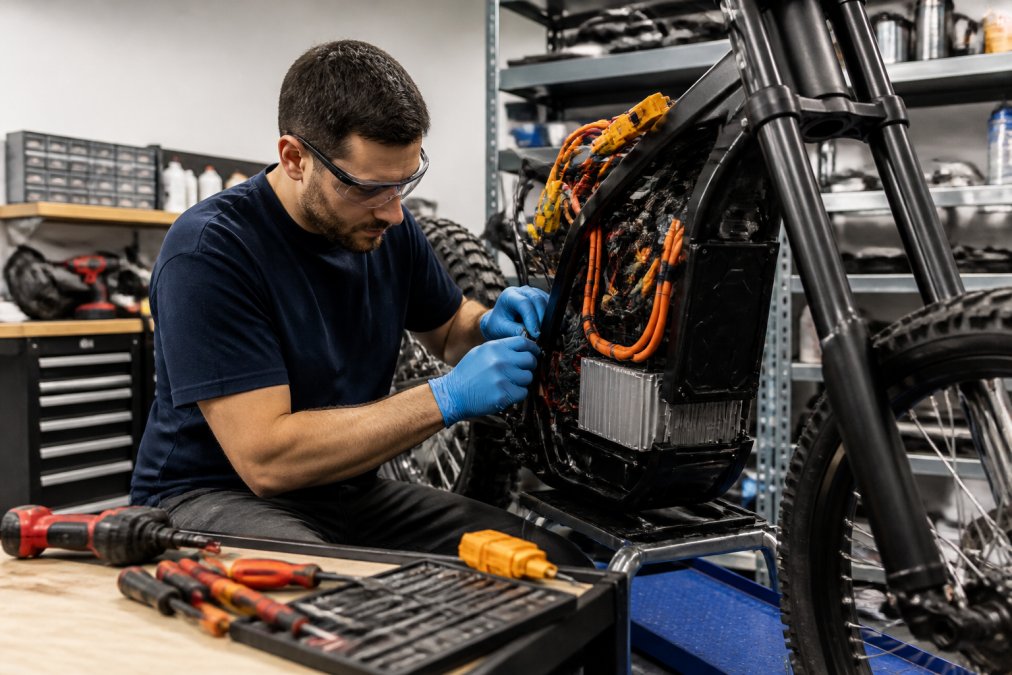
Before touching any high-voltage component, disconnect the battery pack's negative terminal and wait five minutes (osha.gov). Capacitors in the controller can hold charge even with power off. Wear insulated gloves rated for the system voltage (typically 72V for Surron bikes, which requires gloves rated for at least 1000V) (osha.gov). Wear eye protection. Work in a dry environment; water and electricity are a lethal combination.
Never work on the high-voltage system alone. Have another person present who can call for help if something goes wrong. Use a multimeter to verify zero voltage before touching any component. When removing connectors, photograph the configuration first so you can reconnect correctly. Use dielectric grease on all connectors to prevent corrosion. If you're not trained in high-voltage systems, don't attempt this work yourself. Professional diagnostics and repairs on high-voltage components are worth every penny.
Finding Expert Surron Motor Diagnostic Services Near You
The challenge with finding expert diagnostics is that not every shop that claims to work on e-motos actually understands them. Many shops treat electric motorcycles like they're just bikes with batteries bolted on. That's fundamentally wrong. The electrical architecture, the firmware, the thermal management, these require specialized knowledge.
Look for shops that specialize in electric motorcycles, not general bike repair. Ask whether they have diagnostic equipment specifically for your bike's controller. Ask about their experience with Surron bikes specifically. Ask whether they can read error codes, measure cell balance, and test motor resistance. If they can't articulate what those things are, they can't do proper diagnostics.
Untamed Racing is built on this foundation. We specialize in electric motorcycles, we invest in diagnostic equipment, and our team rides these bikes. When you bring a bike in for diagnostics, we run the full protocol: error code scan, voltage and resistance testing, cell balancing check, motor performance verification, and a physical inspection of all components. You get a detailed report of what's working, what's not, and what needs attention. The cost of diagnostics is an investment in clarity. You'll know exactly what's wrong and what it costs to fix.
Finding the right diagnostic service for your electric motorcycle doesn't have to be a gamble. At Untamed Racing, we combine hands-on expertise with professional-grade diagnostic equipment to give you accurate answers about your Surron's health. Our team works on custom builds, heavily modified bikes, and stock machines. Stop by our shop in Chino Hills or reach out to discuss your bike's needs. We'll get your e-moto running hard and keep it that way.
Frequently Asked Questions
Q: What are the most common signs that my Surron motor needs professional diagnostics?
A: Watch for reduced throttle response, inconsistent power delivery, error codes on your display, unusual motor noise, or the bike cutting out during rides. Battery diagnostics should also be performed if you notice rapid charge loss or cell balancing issues. These symptoms often point to controller faults or electrical system problems that require proper diagnostic equipment to identify accurately.
Q: Can I perform a motor diagnostic on my Surron myself?
A: Basic checks like inspecting the wiring harness for damage, verifying tire pressure, and checking chain tensioning are safe DIY tasks. However, interpreting diagnostic error codes, testing high-voltage systems, and performing motor inspection requires specialized equipment and training. Professional diagnostics ensure you don't miss critical issues or risk damage to expensive components like the brushless motor or lithium-ion battery.
Q: How often should I have my Surron motor professionally inspected?
A: Follow your Surron maintenance schedule based on riding frequency. Casual riders should get a full inspection annually or every 1,000 miles, whichever comes first. High-use riders benefit from service intervals every 500 miles or every 3-4 months. Performance tuning or modifications may require more frequent checks to ensure the powertrain stays dialed in and safe.
Q: What should I look for in a professional e-moto mechanic?
A: Choose a shop with hands-on experience servicing multiple e-moto brands, not just one model. Verify they understand lithium-ion battery diagnostics, controller tuning, and high-voltage safety protocols. Ask if they've worked on custom builds and can explain their approach to troubleshooting. A reputable shop will stand behind their work, offer clear communication, and take time to explain findings in terms you understand.
This article was written using GrandRanker