How to Maintain Electric Bike Battery
Table of Contents
- Understanding Your Electric Bike Battery
- E-Bike Battery Charging Best Practices
- How to Store E-Bike Battery for Winter
- Signs of E-Bike Battery Degradation
- Daily Maintenance and Safety Precautions
- Extending Battery Lifespan Through Preventative Care
- Troubleshooting Common Battery Issues
- Frequently Asked Questions
Last Updated: September 21, 2026
Understanding Your Electric Bike Battery
Your e-bike battery is the heart of your ride. Understanding how to maintain electric bike battery prevents maintenance mistakes that drain its lifespan.
Lithium-ion chemistry and charge cycles
Lithium-ion batteries power nearly every e-bike on the market by moving lithium ions between terminals, creating electrical current. Each complete charge cycle degrades the battery slightly; a typical battery handles 500-1,000 cycles before noticeable capacity loss.
A charge cycle is a full discharge followed by a full recharge, not the same as plugging in once. Charging from 50% to 100% counts as half a cycle, which changes how you should approach daily charging.
Lithium-ion cells degrade faster when exposed to heat, overcharged, or completely drained. Manufacturers build battery management systems into modern e-bikes to monitor voltage, temperature, and state of charge.
Battery management system (BMS) basics
Your battery's BMS is a circuit board that monitors voltage, temperature, and current flow. When it detects problems like voltage spikes or overheating, it cuts power to prevent damage or fire.
The BMS also balances cells by routing current through resistors, keeping all cells at the same state of charge and preventing one weak cell from dragging down the whole pack.
If your battery cuts power mid-ride, the BMS is protecting itself from overcurrent, overheat, or voltage anomaly, not a malfunction. Let the battery cool and check for loose connectors or water damage.
E-Bike Battery Charging Best Practices
Learning how to maintain electric bike battery through proper charging determines whether it lasts two years or five. Small changes to your charging routine pay huge dividends.
Optimal charge levels and trickle charging
Stop charging to 100% every time, this is a common mistake. Charge to 80% for daily use and top up to 100% only before longer rides.
A battery charged to 80% regularly will outlast one constantly charged to 100% by months or years because voltage stress is lower.
Trickle charging, built into modern chargers, maintains a battery at low current once full. However, don't leave it plugged in for weeks. Charge it, unplug it, and store at around 50% state of charge if not riding for extended periods.
Avoiding overcharging and fast charging risks
Fast chargers generate heat, which stresses battery chemistry. Use them only when necessary, before a ride, not as your daily routine.
Overcharging happens when you leave a battery plugged in for days or weeks. Modern BMS systems prevent true overcharging, but keeping cells at maximum voltage constantly degrades them. Charge when you need to ride, then disconnect.
Never charge a battery that's hot from riding, let it cool first. Charging a warm battery stresses cells and risks thermal runaway. Don't charge below 32°F, as this can permanently damage cell structure.
How to Store E-Bike Battery for Winter
Winter storage is where most riders fail. Cold weather and dormancy accelerate degradation without proper care.
Cold weather performance and thermal stress
Lithium-ion batteries lose capacity in cold, a battery delivering full power at 70°F might deliver only 60% at 20°F. This is temporary, but repeated cold-weather cycling causes permanent capacity loss.
Store your battery indoors at room temperature when not riding. Bring it inside after each ride and let it warm up before charging. Never leave it outside overnight in freezing temperatures.
For long-term winter storage, prepare your battery properly. Charge it to 50% state of charge, not full, not empty. This voltage level is the sweet spot for minimizing degradation during dormancy. A battery stored at full charge for months will lose capacity faster than one stored at 50%.
Climate-controlled storage and moisture protection
Store your battery in a climate-controlled space between 50-77°F with humidity below 60%. Moisture corrodes connectors and damages the BMS. If wet, dry completely before storing or charging.
Check connectors regularly for corrosion. Clean white or green oxidation with a dry cloth or cotton swab dampened with white vinegar. Let dry completely before plugging in.
If storing for more than two months, check monthly. If battery drops below 30% state of charge, charge it back to 50% to prevent deep discharge damage.
Signs of E-Bike Battery Degradation
Recognizing early warning signs lets you address problems before your battery fails mid-ride.
Capacity loss and reduced range indicators
Your battery is degrading if your range drops noticeably without changes to your riding style or terrain. A new battery might give you 40 miles of range. After 300 charge cycles, expect around 85-90% of that. After 500 cycles, expect 75-80%. If you're seeing drops steeper than this, something's wrong.
Capacity loss happens gradually with normal use, but rapid drops indicate a problem. Common causes include consistently overcharging, storing at high temperatures, or deep discharges. If your range drops 20% in just a few months, your battery is experiencing accelerated degradation.
Test your actual range by riding on flat terrain at moderate speed and noting when the battery depletes. Compare this to your baseline from when the battery was new. A consistent 5-10% annual loss is normal. Anything steeper suggests you need to adjust your charging or storage habits immediately.
Voltage drops and error codes
Your battery's BMS displays error codes when something's wrong. These codes vary by manufacturer, but common ones indicate overcurrent, overheat, or cell imbalance. When you see an error code, the BMS is protecting your battery from damage. Don't ignore it.
Voltage drops during discharge are normal, a fully charged battery sits around 4.2 volts per cell, and depleted cells sit around 2.5 volts. But if voltage drops rapidly under load (you're riding and the battery suddenly loses power), that signals a failing cell or loose connector. Check all connections first. If connectors are clean and tight, the battery likely needs professional service.
Some batteries show voltage imbalance errors. This means individual cells have drifted out of sync. The BMS can rebalance them during charging, but repeated imbalance warnings suggest a cell is failing. Have the battery checked by a professional before it fails completely.
Daily Maintenance and Safety Precautions
Your battery doesn't need constant attention, but a few minutes per week prevents most problems.
Connector cleaning and fire prevention
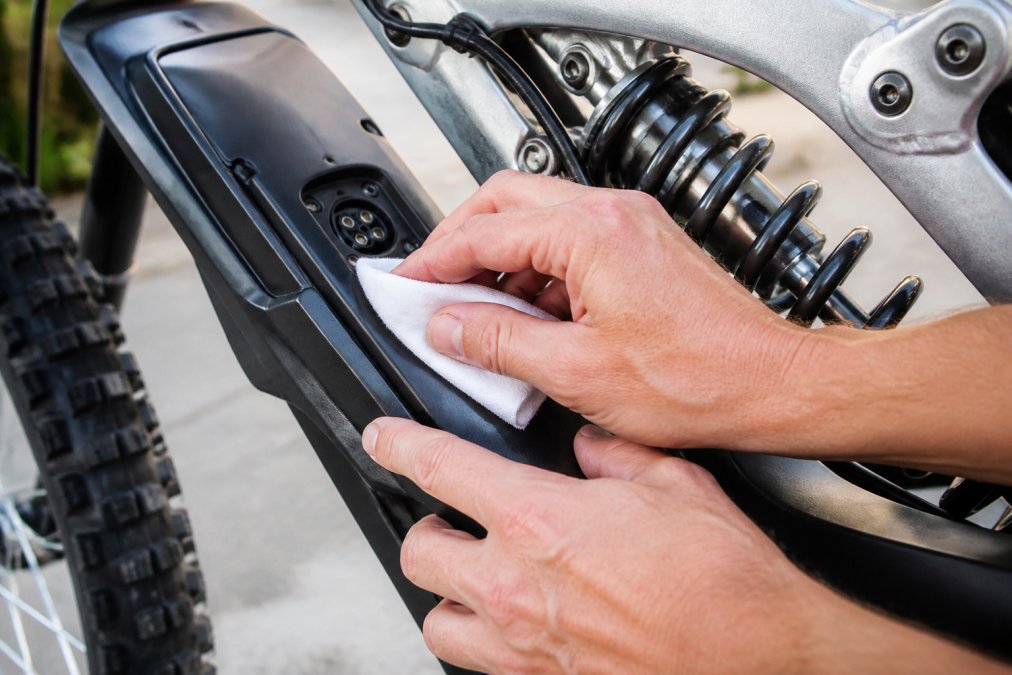
Battery connectors are where most problems start. Dirty or corroded connectors create resistance, forcing the BMS to work harder and generating heat. Check connectors weekly for dirt, corrosion, or moisture. Clean them with a dry cloth or a cotton swab. Never use water or solvents, they can damage the connector pins.
Thermal runaway is rare but catastrophic. It happens when a cell's internal temperature spirals out of control, causing the cell to rupture and ignite. This is why BMS systems exist, they cut power before temperatures reach dangerous levels. To prevent thermal runaway, never charge a battery that's hot, never expose it to direct sunlight for extended periods, and never puncture or crush the battery case.
If your battery gets physically damaged, dropped hard, crushed, or punctured, don't use it.
Ventilation and thermal runaway awareness
Store your battery in a ventilated space. Good airflow helps dissipate heat and prevents moisture buildup. A shelf in a garage or closet is fine. A sealed plastic bin is not. If you're storing multiple batteries, space them out so air can circulate around each one.
Extending Battery Lifespan Through Preventative Care
Small habits compound into years of extra battery life. The riders who get 5+ years from a battery are the ones who treat it consistently, not the ones who occasionally remember to be careful.
Managing depth of discharge and state of charge
Depth of discharge is how much of your battery's capacity you use before recharging. A shallow discharge, using 30% of capacity before charging, stresses the battery far less than a deep discharge of 80%. Whenever possible, charge before your battery drops below 20% state of charge.
Disposal and recycling when battery reaches end of life
When your battery finally reaches end of life, typically after 500-1,000 charge cycles, don't throw it in the trash. Lithium-ion batteries are recyclable and contain valuable materials. They're also hazardous waste in most jurisdictions.
Troubleshooting Common Battery Issues
When something goes wrong, start with the basics before assuming the battery is dead.
Frequently Asked Questions
Should I leave my e-bike battery plugged in all the time?
No. Leaving your battery constantly plugged in causes overcharging and accelerates cell degradation. After reaching full charge, unplug immediately. Many riders keep their electric bike battery charged between 20% and 80% state of charge for daily use, which significantly extends lifespan. Only charge to 100% when you need maximum range for a long ride.
What are the signs of a failing e-bike battery?
Watch for reduced range despite a full charge, slower acceleration, the battery getting hot during use, or error codes on your display. Physical signs include swelling, corrosion on connectors, or visible damage to the casing. If your battery loses more than 20% capacity within the first year, have it inspected by a technician who understands battery management systems.
How often should I charge my e-bike battery?
Charge based on your riding distance, not a fixed schedule. Avoid letting your battery fully discharge, this deep discharge stresses lithium-ion cells and reduces cycle life. If you ride daily, charge after each use to 80% rather than waiting until the battery is depleted. For occasional riders, charge every 2-4 weeks to maintain health during storage.
Can I store my e-bike battery in cold weather?
Cold reduces performance temporarily but won't permanently damage the battery if stored correctly. Keep your electric bike battery in a climate-controlled space between 50°F and 77°F. If you must store outdoors in winter, charge to 50% state of charge, remove the battery from the bike, and place it in an insulated container with moisture protection to prevent thermal stress and corrosion.
Maintaining your e-bike battery comes down to consistency. Charge to 80%, avoid heat and moisture, store at 50% during long breaks, and replace when capacity drops below acceptable levels. At Untamed Racing, we work on countless e-motos and e-bikes, and the riders who get the most life from their batteries are the ones who treat them deliberately. Your battery is an investment, treat it like one, and it'll power hundreds of rides before you need a replacement.